Treatments
Embark on a path of holistic healing with our range of Ayurvedic Treatments. From personalized consultations to rejuvenating therapies, transformative Panchakarma experiences, and specialized treatments – explore a world of wellness tailored just for you.
Consultations
In our consultations, we do not look at the disease alone. Each condition is understood based on your prakruti, current imbalance (vikruti), digestion (agni), and lifestyle. The aim is to identify the root cause and correct it step by step…
Women Care
- Menstrual health, hormonal balance, cycle regulation, and overall reproductive well-being.
Thyroid Disorders
- Support in regulating metabolism through diet, medicines, and lifestyle correction.
IBS / Constipation
- Improving gut function, relieving bloating, irregular bowels, and discomfort.
PCOS / Endometriosis
- Managing hormonal imbalance, pain, and improving reproductive health.
Diabetes / Hypertension
- Long-term management through ahara (diet), vihara (lifestyle), and medicines.
Infertility (male & female)
- Preparing the body through purification and strengthening therapies.
Arthritis / Joint Pain
- Reducing inflammation, stiffness, and improving mobility.
Allergy / Sinusitis
- Addressing recurrent cold, congestion, and respiratory sensitivity.
Anxiety / Stress
- Calming the nervous system and improving sleep and mental clarity.
Skin Disorders (including psoriasis)
- Working on internal detoxification along with local care.
Hair Fall / Dandruff
- Correcting underlying causes like stress, nutrition, and scalp health.
Piles / Fissure / Fistula
- Managing digestion, bowel habits, and local healing.
Therapies
Abhyangam
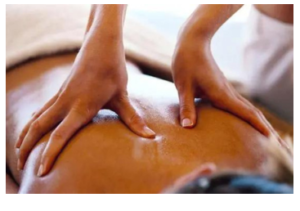
Abhyangam is a traditional Ayurvedic massage that uses long strokes and rhythmic movements to stimulate blood circulation, relax muscles, and promote overall well-being. This is a special type of oil massage in which hand strokes are made according to the disease. It enhances blood flow and is usually given as a pre-procedure to many therapies as well as a separate therapy in itself.
Indication:
- Obesity
- Rheumatism
- Blood pressure
- Spondylosis
- Generalized weakness
- Stress and strain
- Rejuvenation
- Relaxation
- Vigour & vitality
“Swedana” refers to the process of inducing sweating for therapeutic purposes. There are two common types of Swedana: “Bashpa Swedana” (steam box treatment) and “Nadi Swedana” (local steam therapy).
Bashpa Swedana (Steam Box Treatment)
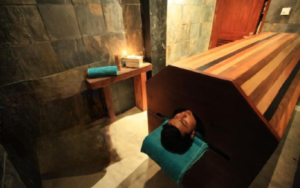
This type of Swedana involves enclosing the patient in a steam box, where herbal steam is introduced to induce sweating. The patient sits inside the box, with only the head outside, while steam infused with medicinal herbs is directed into the box. The warmth and steam cause the body to sweat, helping to eliminate toxins, improve circulation, relax muscles, and relieve stiffness. This type of Swedana is often used as a preparatory procedure before other Ayurvedic therapies like Panchakarma, to help loosen and eliminate toxins from the body.
Nadi Swedana (Local Steam Therapy)
Nadi Swedana is a more targeted form of steam therapy, focusing on specific body areas. It involves directing steam over specific body parts, usually joints or areas with localized pain. This type of Swedana is particularly beneficial for relieving stiffness, reducing swelling, and alleviating pain associated with arthritis and musculoskeletal disorders. The localized application of steam helps to dilate blood vessels, improve circulation, and relax muscles in the targeted area.
Valukapotali
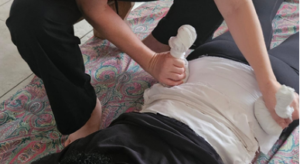
It is a therapeutic massage using herbal powders. It helps in reducing excess body fat, improving skin texture, and boosting metabolism. This treatment involves fomentation with heated sand bags. It is utilized to address localized pain, improve joint mobility, and alleviate muscle stiffness.
Isthika Swedanum
It is a traditional method which involves fomentation using bricks. In this process, a brick is heated until it turns red hot. Then, a container of rice kanji (fermented rice gruel) is placed over it. The patient sits on a stool, keeping a safe distance from the hot brick. Steam is produced when we pour the rice kanji onto the hot brick, and the patient benefits from this steam-based fomentation. This technique is particularly beneficial for addressing heel pain and is commonly used in Ayurvedic treatments for Vatakantaka (calcaneal spur).
Udvartanam
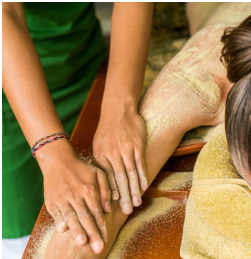
Popularly also known as weight loss massage, it is a stimulating massage using special herbal powder to reduce cellulite accumulations, improve circulation, and enhance your skin’s texture and appearance. We thoroughly exfoliate your body using a powerful mixture of Ayurvedic powders which will break up fatty deposits and energize blood circulation. A delightful body treatment to remove excess heat from your body, enhancing circulation and drawing fresh energy to the surface of the skin.
The treatment is good for diseases like diabetic neuropathy, paralysis, obesity, skincare, sciatica, indigestion, and sclerosis of blood vessels. The massage activates the nerves and increases blood flow to the impaired parts of the body. Udvartanam is also an important health-preserving massage. As the massage promotes active blood flow, it revitalizes and reconditions the body, thus preserving its strength, skin texture, and natural elasticity. Fat reduction is one of the significant benefits in cases of obesity.
‘Triphala’ is the most commonly used powder in the treatment. It is a mixture of excellent nerve-stimulating agents such as Gooseberry, Belerica, and Myrobalan. The medicated powder is applied all over the body and massage is done in the opposite direction of the hair roots, with appropriate pressure. Extra massage is provided on specific parts of the body depending on the type of the disease. The massage goes on for about 30 to 40 minutes. During this time, the body surface slightly warms up and expels traces of toxic coatings on its nerve endings. This facilitates faster nerve stimulation and blood circulation to the damaged areas of the body.
Udvartanam also promotes elasticity of the skin and makes the body soft and fatigue-free. The duration and type of medicine to be used are decided by the physician after considering various related factors such as the person’s body constituency, his digestive capacity, psychic state, age, strength, etc. Herbal medicines like Kashayam (decoction), Gulika (pills), and Choornam (powder) are also given along with the massage. Usually, one to two weeks of treatment, along with a strict carbo-less diet, gives good results. Other herbs commonly used for Udvartanam are costus roots, deodar, Senna, horse gram, phyllanthus, and mustard. Horse gram and mustard, considered to be hot in nature, are very good nerve stimulators.
Podikizhi
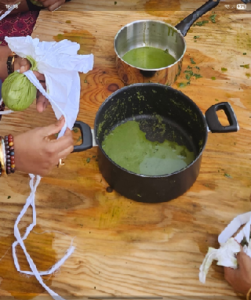
Podikizhi involves massaging the body with heated herbal powders packed in boluses. It aids in relieving pain, inflammation, and promoting relaxation.
Elakizhi
Like Podikizhi, Elakizhi uses boluses filled with herbal leaves to massage the body. It is effective in treating joint issues, muscular pain, and improving circulation.
Navarakizhi
In this treatment, boluses filled with cooked Navara rice are used for a massage. It is known to enhance muscle strength, alleviate pain, and rejuvenate the body. “Navarakizhi or Shashtika Shali Pinda Sweda” is a form of sweat-inducing massage treatment. It is used to improve muscle strength, rejuvenate, and re-energize the body. Here, milk and rice are mainly used.
Milk is a well-known nutrient to us, so is rice. They form a part of our daily diet. But in this write-up, we shall see how these two food products are used for treatment purposes, not when taken internally but when applied externally.
Yes! You have heard it right. Milk processed with medicinal herbs and a special type of rice are combined together to be used as an effective external therapy. This treatment is used to provide strength and nutrition to the body tissues, especially bones, muscles, and other soft tissues.
The treatment is a special gift from Ayurveda to the ailing world and is called Shashtika Shali Pinda Sweda in Sanskrit and Navarakizhi in Kerala Ayurvedic practice.
Though it is a sweating form of treatment, often, the term massage is associated with this treatment because sweating is used by massaging. This is common in sportsmen, especially runners, as a pre-run strengthening massage.
Indications
- Emaciation of limbs
- Skin diseases
- Rheumatism
Pizhichil
In this warm herbal oil, massages are combined with a rhythmic manner, pouring the oil from height like dhara and performing synchronized massage simultaneously. It’s beneficial for joint issues, muscle pain, and improving skin texture.
Vestanum
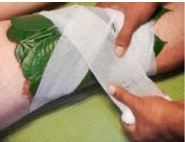
Medicated bandages. A dhoti cloth is smeared in medicated hot oil and applied to the affected painful area to alleviate pain, followed by bandaging it with warm castor leaves for 45 minutes. It can be done with medicated fresh paste depending upon the condition.
Pichu
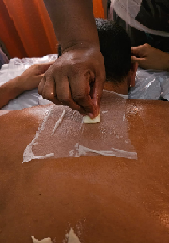
Pichu involves applying medicated oils or herbal pastes on specific body parts and covering them with a cloth. It is used to alleviate pain, inflammation, and promote healing.
Lepas
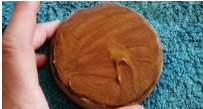
Lepas refer to medicated pastes that are applied externally to address various concerns.
Shoolshamana Lepas
Help alleviate pain.
Soundaryavardhak Lepas
Enhance skin radiance.
Dhara
Dhara is a therapy in which a continuous stream of liquid is poured over the body in a controlled manner. When the pouring is done on a specific part of the body, it is called Ekanga Dhara (localized dhara). When it is done over the entire body, it is called Sarvanga Dhara. When the pouring is specifically over the head or forehead region, it is called Shirodhara.
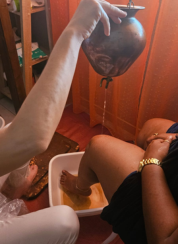
These procedures can be done using different types of liquids depending on the condition, such as medicated oils, decoctions (kashayams), milk, medicated milk, buttermilk, medicated buttermilk, and in some cases, ghee. The selection of the liquid is based on the dosha involved and the requirement of the patient.
Shirodhara (Dhara Therapies)
Shirodhara is not a single procedure — it is chosen based on the condition and dosha involved. The liquid used makes a significant difference. It is known for its relaxing and stress-relieving effects, often used to calm the mind, promote sound sleep, and alleviate mental stress and anxiety.
Indication:
- Insomnia
- Mental tension
- Headache, migraine
- Sinusitis
- Certain skin diseases
- Stress & strain
- Depression
- Hair care
Taila Dhara (Oil Dhara)
Medicated oil is poured over the forehead in a continuous stream. It is mainly used in Vata disorders, anxiety, dryness, insomnia, and nervous system imbalance. It gives grounding and stability.
Ksheera Dhara (Milk Dhara)
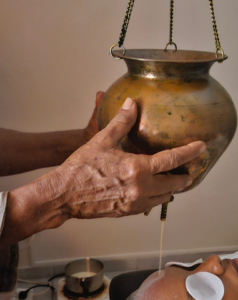
Processed milk is used. This is more cooling and soothing, suitable in Pitta conditions, burning sensation, irritability, and certain skin conditions with heat component. It is used to moisturize and nourish the skin, making it a great option for conditions like dry skin, psoriasis, and eczema.
Takra Dhara (Buttermilk Dhara)
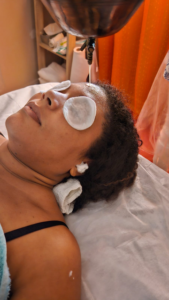
Medicated buttermilk is used. It is particularly effective in conditions involving both Pitta and Vata, like psoriasis, scalp disorders, and stress-related issues with heat.
Each dhara is selected after understanding whether the body needs nourishment, cooling, or calming.
Thalapothichil/Thaladharanum
Thalapothichil is an Ayurvedic therapy in which a medicated herbal paste is applied over the scalp and retained for a specific duration. It is mainly used to calm the mind and reduce excess heat in the head region.
The herbal paste is freshly prepared using selected herbs based on the individual’s condition and dosha imbalance. For Pitta-related conditions, cooling herbs like sandalwood, amla, and vetiver are used. In Vata conditions, nourishing herbs such as bala or ashwagandha may be added, while in Kapha conditions, lighter and drying herbs like triphala are preferred. The paste may be prepared using suitable mediums like decoctions, milk, buttermilk, or medicated oils to enhance its effect.
The procedure usually begins with a gentle head massage, followed by application of the paste, which is kept for about 30–45 minutes.
It is commonly advised in conditions like stress, anxiety, disturbed sleep, headache, hair fall, and scalp-related issues. Thalapothichil helps in relaxing the nervous system, improving sleep, reducing Pitta imbalance, and supporting overall scalp and hair health.
Shirovasti
Shirovasti is a word comprising of 2 terms, Shiro meaning head, Vasti meaning pooling of herbal oils and or medicated liquids on the head. Thus, Shirovasti means pooling the liquid medicines, especially herbal oils and or ghee in a chamber or compartment constructed over the head.
Synonyms – Shiro Basti (Vasti also means Basti, both mean ‘to stay’, here the liquid medicines stay within the walls of the constructed compartment)
Ayurveda considers the human body as an inverted tree wherein the roots are at the top and the branches pointing downwards.
If the human body is considered to be a tree –
- The head of the human body will be considered to be the roots of this tree,
- The central portion of the body made up of thorax and abdomen is said to be the trunk of this tree, and
- The limbs (upper and lower) are considered to be the branches of this tree.
The head is an abode of the remote control of the entire body – ‘The Brain and nerves’ and all the components which keep us attached and attracted to this material world – ‘The Sense Organs’. For these reasons, the head is called as ‘Uttamanga’.
Since taking care of the head and its components is mandatory for maintaining a healthy life, we need to nurture, pamper, relax, soothe, and strengthen the engine of our system by conducting Shiro Abhyanga and other treatments mentioned in Moordha Taila or Murdhni Taila.
Kati Vasti
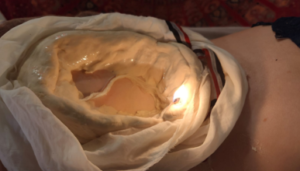
Specially prepared warm medicated oil is kept over the lower back within herbal paste boundary for 20 to 30 min.
Indication:
- Spondylosis,
- Sciatica,
- Slip disc & Mechanical Backache.
Netrabasti/Netratarpan
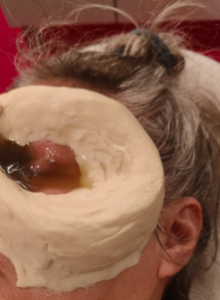
It is a cleansing process for the eyes, which gives a cooling effect to the eyes, prevents eye disease, strengthens the optic nerve, and also improves eyesight. This procedure takes 20 to 45 minutes.
Indication:
- Eyestrain due to TV,
- Computer,
- Pollution,
- Tired eyes,
- Watering of eyes,
It helps in preventing early formations of cataract.
Grivabasti
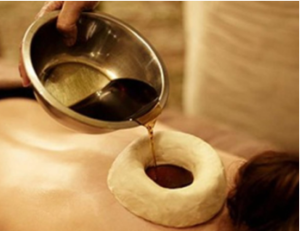
In this treatment, medicated oil, ghrita is placed into a rim of urad flour made around at the back of the neck.
Indication:
- Useful in neck and shoulder pain,
- Cervical spondylosis.
Hridbasti
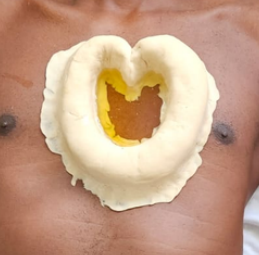
It is a unique treatment for heart and chest diseases, here medicated oil, ghrita or decoction of herbs is placed into the rim of urad flour.
Indication:
- Useful for strengthening of heart,
- Angina,
- Asthma and other respiratory problems.
Janubasti
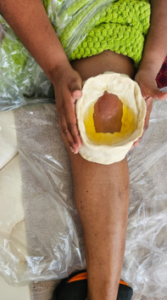
In this treatment, medicated oils, ghrita is placed into the rim of urad flour made at the knee joint.
Indication:
- Osteoarthritis,
- Rheumatic Arthritis,
- Gout etc.
It cleanses accumulated Kapha toxins from the head and neck. Herbal juices, medicated oil, Churna, ghrita, fumes of herbs used through nostrils.
Indication:
- Effective for headache,
- Paralysis,
- Sinusitis,
- Hair Fall etc.,
Panchakarma
Purvakarmas are preparatory procedures in the Ayurvedic Panchakarma therapy, which is a comprehensive detoxification and rejuvenation program. These preparatory steps help the body and mind to become receptive to the main Panchakarma procedures. They include:
- Snehana (Oleation): This involves internal and external oil application to soften and mobilize toxins, allowing them to move towards the digestive tract.
- Swedana (Sudation): Swedana includes different forms of heat therapy, such as steam baths or herbal fomentation, which open the body’s channels and help toxins move out.
Pradhankarmas
The Panchakarma encompasses five treatments that can prevent and heal a number of physical, mental, and emotional disorders and illnesses.
Vamana
Advantages of Vaman therapy:
- Vitiated and aggressive Kapha dosha is expelled out of the body, leading to cure of disease.
- The digestion and metabolism power gets enhanced, normal health is restored;
- The sense organs, mind, intelligence, and complexion become clear and gain strength;
- The person gains strength, nourishment, and immunity. It improves the chances of fertility, virility, and sexual power. It helps to slow down the aging process. One can live healthily for a long time.
Indications for Vaman Panchakarma treatment – Vomiting therapy should be administered in two Kapha conditions – When Kapha Dosha is increased aggressively causing a disease.
Kapha is associated with Pitta dosha and they together cause disease, but Kapha (aka Shleshma) is the dominant Dosha.
Vomiting should be allowed till the appearance- coming out of Pitta. This is appreciated by expulsion of bile or yellow sticky material, at the end. Coming out of Pitta indicates complete expulsion of Kapha Dosha.
Ayoga – inadequate bouts – Non-commencement of bouts, bouts coming on with hindrance or elimination of the medicine only- are the features of inadequate bouts; from it arise, excess of expectoration, itching, appearance of skin rashes, fever etc.
Diet regimen after Vamana treatment
It is also called as Samsarjana Krama. Soon after emesis, the digestive capacity of the patient is very low. Hence, all of a sudden regular diet cannot be introduced. Instead, liquid diet should be started and gradually turning to solids.
In the same evening or the next day after Vamana, the patient should take a bath in lukewarm water.
He should be given warm gruel (Manda) prepared with well-cooked old rice. The gruel should be very thin. This is to be given with due regard to the power of digestion, for three meal-times.
For the fourth meal-time, gruel prepared with rice (Vilepi), well-cooked, warm and devoid of oil/ghee and salt altogether or with oil/ghee and salt in small quantity is to be given. Warm water is to be taken after the intake of gruel.
The same type of diet is to be continued for the fifth and sixth meal-times.
For the seventh meal-time again, well-cooked porridge (odana) prepared with the same type of rice of two Prasruta along with a very thin green gram soup (Mudga yusha), added with oil/ghee and salt in small quantity is to be given. Warm water should be taken after the intake of the porridge. The same diet is to be repeated for the eighth and ninth meal-times.
For the tenth meal-time, thin meat-soup (Mamsarasa) prepared with water and salt should be given. Warm water is to be taken after this.
This is again to be repeated for the eleventh and twelfth meal times. Thereafter, the patient should take food having different tastes and he should start taking his normal diet from the seventh night.
Indications: Bronchial asthma, chronic allergic disorders, acidity, chronic indigestion, skin ailments like psoriasis, vitiligo, acne, etc.
Virechana
Virechana or Virechana Karma is a purification therapy and one among the five sacred, healing therapies of the Panchakarma. It is a medicated purgation therapy aimed at purifying the entire body. It is used mainly for ‘pitta’ disorders. This requires pre and post procedures regimes for proper detoxification and cleansing.
Indications:
- Hyperacidity
- Intestinal cleansing
- Joint disorders
- Digestive disorders,
- Gynecological Disorders
- Asthma
- Diabetes
- Skin ailments
- Headache etc.
Treatment
The Virechana therapy is medicated purification therapy, cleansing the body from excess pitta accumulation, purifying blood and clearing toxins. The therapy primarily concentrates on the toxins accumulated in the liver and gall bladder, thus cleansing the gastrointestinal tract completely.
Virechana Karma, mentioned in the Charaka Samhita, is known to be the best cure for treating the diseases emerging from vitiation of the pitta dosha.
Types of Virechana Karma
- Anulomana
- Sansarjana
- Bhedana
- Rechana
Benefits:
- Virechana Therapy is recommended and is highly beneficial for the following:
- Detoxification in case of accumulation of Pitta dosha,
- Eliminates toxin accumulation in the GI tract,
- Effective treatment for piles, constipation, acidity, ulcers, liver/spleen diseases, jaundice, inflammations,
- Cleanses body from poisoning,
- Cures mild and chronic skin disorders,
- Relieves headaches, anemia, pain in the large intestine, non-healing wounds – Helps manage diabetes, asthma, and heart diseases,
- Reduces gynecological disorders,
Virechana therapy is an effective Ayurvedic treatment that can cure a number of health problems naturally. The Virechana Ayurvedic detox program, which may take 3 to 8 days, is also safe from any side effects.
Vasti
In Ayurveda, the term “Basti” refers to one of the primary methods of treatment, which involves administering therapeutic substances through the rectum. Basti therapy is an essential component of Panchakarma, the traditional detoxification and rejuvenation protocol in Ayurveda. There are several types of Basti, each with its specific indications and benefits. Here, I’ll provide an overview of some of the different bastis in Ayurveda:
Anuvasana Basti
This is an oil-based enema that involves the introduction of medicated oils or ghee (clarified butter) into the rectum. Anuvasana basti is typically used to nourish and rejuvenate the body, especially in cases of Vata dosha imbalance, constipation, or dryness.
Niruha Basti (Decoction Enema)
Niruha Basti involves the administration of a decoction made from herbs, along with other ingredients like honey, salt, or oils, through the rectum. It is used to treat a wide range of health conditions, including digestive disorders, arthritis, and gynecological issues.
Matra Basti
This is a mild form of Basti, where only a small quantity of medicated oil or decoction is administered. Matra Basti is often used as a maintenance therapy for promoting general health and well-being.
Uttara Basti
Uttara Basti is a specialized form of Basti used in gynecological disorders. It involves the introduction of medicated oils or decoctions through the urethra or vaginal canal, depending on the condition. It is particularly beneficial in managing conditions like infertility and certain menstrual disorders.
Karma Basti
Karma Basti is a combination of both Anuvasana (oil-based) and Niruha (decoction-based) Basti. It is typically administered over a specified course of treatment and is considered a more comprehensive form of Basti therapy.
Nasyam
”Nasa hi shiraso dwaram” (A.H.su.20/1)
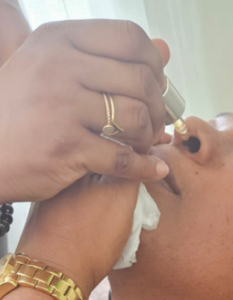
The nose is the gateway of the head. Medicines administered by this route pervade the head and destroy the diseases. It is one of the panchakarma and also can be done as a Nityakarma as a dunacharya.
Nasya is an excellent Ayurvedic treatment for preventing and curing nasal allergies, headache, stiff neck, and diseases of the ear and throat. It helps to cleanse and strengthen the sense organs. It is a useful remedy for urdhav jatrugatroga (diseases above the shoulders).
Raktamokshana (Jaloukavacharan)
Raktamokshana therapy is the blood cleansing and purification therapy. It is a therapeutic cleaning process given by Ayurveda. It is one of the essential parts of the Panchakarma healing treatments. It is the prime process of blood detoxification. It is derived from the two words, “Rakt,” which means blood, and “Mokshana,” which means leave. Thus, Raktamokshana means to let the blood out. The blood is expelled out from the body to reduce the quantity of toxic substances in the blood-borne disorders. However, this therapy is not generally recommended to the patients. This is because it involves a certain amount of risk factors in the whole cleansing and detoxification processes.
Raktamokshana therapy in Ayurveda
Classifications Of Raktamokshana
Raktamokshana is generally of the following two types:
- When Kapha Dosha is increased aggressively causing a disease.Kapha is associated with Pitta dosha, and they together cause disease, but Kapha (aka Shleshma) is the dominant dosha.
Vomiting should be allowed till the appearance of Pitta. This is appreciated by the expulsion of bile or yellow sticky material at the end. Coming out of Pitta indicates complete expulsion of Kapha Dosha.
- Ayoga – inadequate boutsNon-commencement of bouts, bouts coming on with hindrance, or elimination of the medicine only are the features of inadequate bouts; from it arise excess of expectoration, itching, appearance of skin rashes, fever, etc.
1. SHASTRA VISRAVANA
Generally, metallic instruments are used to carry out this process. It is further classified into two more categories: Pracchana, which means letting the blood pass through several incisions, and Siravyadha, which is also known as the Venepuncture.
2. ANUSHASTRA VISRAVANA
The metallic instruments are not considered for carrying out this procedure. It is further classified into three categories:
- Jalaukavacharana, which means applying leeches. This is mainly done for the patients with Pitta dosha disorders.
- Alabu, which means creating a vacuum and extracting blood through the vacuum using a vegetable, which may be bottle gourd or Alabu. This is mainly done for treating Kapha dosha diseases.
- Shrungavacharana, which means applying the cow’s horns. This is mainly taken into account for treating the Vata disorders.
Of all the various classified types, Venepuncture of Siravyadha plays the most popular role in carrying out Raktamokshana effectively.
Complications To Be Treated With Raktamokshana Therapy
Individuals with aggravated unbalance between the blood (rakt) and Pitta dosha (fire body tumor) and high levels of toxicity are recommended the Raktamokshana therapy. The important complications to be treated with the therapeutic therapy are skin disorders like allergic dermatitis, eczema, and sciatica. Some other disorders, which must be treated with Raktamokshana therapy, include abscess, edema, swelling and inflammations, uremia, dullness, pericarditis, and tonsillitis. Also, this procedure helps in the proper functioning of the liver, heart, and other essential organs of the body.
Procedure Of Carrying Out Raktamokshana
Raktamokshana, the specialized detoxification process, comprises the following steps:
- Pre-procedure or Purva Karma
- Main Procedure or Pradhana Karma
- Post-procedure or Paschat Karma
Purva Karma
It is carried out in regular periods. It is mainly done for diseases like gout, filariasis, psoriasis, glaucoma, edema, erysipelas, liver, and spleen disorders. Cotton swabs and gauze pieces are some of the proper instruments used to carry out this procedure.
Pradhana Karma
The various aspects to be considered during Pradhana Karma are the following:
- Prachhana – This method helps to provide relief from stress, tension, and anxiety.
- Siravyadha – According to the disease, the vein is selected. After oleation and sudation, the liquid gruel is injected. The patient either lies down or sits in an erect posture.
- Size of puncture – The size should be that of 1 brihi or half barley, and in muscular areas, it should be the size of yava.
- Jalaukavacharana – Tiny sized nicks are applied near the affected region. As soon as the blood oozes out, the leech is applied. When the leech sucks, the mouth takes the form of the horse’s hooves. Its neck is then covered using wet cotton. When enough blood is sucked, the leech leaves the area and moves down. In case it does not leave on its own, turmeric powder is sprinkled on the leech.
Jalouka (leech) therapy is a traditional practice in Ayurveda, an ancient Indian system of medicine. It involves the application of medicinal leeches to the body as a means of treating various health conditions. This therapy, known as “Jaloukavacharan,” is believed to promote blood circulation, remove toxins, and balance the body’s doshas (energetic forces).
Jaloukavacharan, or leech therapy, is performed by placing leeches on specific points of the body. These leeches suck blood from the targeted area, releasing their saliva, which contains bioactive compounds with potential therapeutic effects. The saliva contains enzymes that act as anticoagulants, vasodilators, and anti-inflammatory agents. Shringa Yantra – The horns are applied on the fleshy part of the body. The air gets sucked out, which creates a vacuum. The blood oozes out.
Post Care
After the Pradhana Karma is done, dressing is done with a massage gently surrounding the wound. This is done with the help of the medicated oil.
Raktamokshana works as a preventive therapy and curative therapy as well. This therapy in Ayurveda is a partial or a complete treatment depending on the situation.
Paschat Karma
Paschat Karmas are the post-therapeutic measures taken after Panchakarma treatments to help the body regain balance and strength. They involve dietary and lifestyle adjustments to ensure a smooth recovery and maintain the effects of Panchakarma. Paschat Karmas also include rejuvenating therapies and herbs to rebuild the body’s tissues and strengthen the immune system.
SPECIAL TREATMENTS
Swarnaprasha
Swarna Prashana is one of sixteen samskaras mentioned in ancient texts for pediatrics. It is a unique method to build long-lasting health and intellect naturally. Since ancient times, our ancestors passed their best practices of holistic lifestyle to their next generations. Over a period of time, they became a ritual that got integrated into their day-to-day life. These series of rituals are known as samskaras. They are connected with the major events of life such as pregnancy, childbirth, naming ceremony, education, marriage, etc. These samskaras enable us to live a complete fulfilling physical and spiritual life.
In the world of medicines with harmful side effects, genetically modified food, chemically treated drinks, busy lifestyle, electronic distractions, and unpredictable environment, it is a big challenge for parents to build stronger and intelligent kids.
Swarna Prashana is a natural, time-tested practice for more than 1000 years by our ancestors that builds overall health and intelligence naturally without leaving any harmful side effects.
The word “Swarnaprashana” is a combination of two words – “Swarna” and “Prashana.” The term Swarna is a common word and refers to the noble metal gold. Prashana refers to the act of eating/consuming/ingesting.
Swarna Prashana is a unique method of giving swarna bhasma (gold ash) mixed with honey and ghee that is fortified with herbal extracts like vacha, brahmi, shankupushpi, etc., to children orally. This process promotes overall growth in a natural way. Due to its broader benefits, it is not only useful for normal children; it’s much more beneficial for children with special needs such as autism, learning difficulties, attention deficit disorder, hyperactivity, delayed milestones, etc.
The origin can be traced back to Vedic ages. References about Swarna Prashana can be found in Grihya Sutras and Manusmriti. Direct reference about Swarna Prashana is available in Kashayapa Samhita or Vridha Jeevaka Tantra written before 600 B.C.
“SWARNAPRASHANAM HYETAN MEDAGNI BALAVARDHANAM AYUSHYAM MANGALAM PUNYAM VRUSHYAM VARNYAM GRAHAPAHAM” – Ka. Su. 18/4-5
It means the following benefits can be achieved:
- Medha (intellect)
- Agni (digestive and metabolic power)
- Bala (strength)
- Aayush (gives long life)
- Mangalam (is auspicious)
- Punyam (virtuous)
- Vrushyam (aphrodisiac)
- Varnya (increases complexion)
- Grahapaham (eliminates the evil effects of planets)
Age
Swarna Prashana can be given from birth till 16 years.
Time
On an empty stomach, preferably early morning. Avoid it during fever and cold.
Day
Pushya is one among the 27 nakshatras. It is also known as Indrapurohita, Pusya, Pushka, Pushkarya, Pushkararaja, Pushyami, Poosam (Tamil), Pooyyam, Paushakya, Tishya, Taisa, and Vutkrta.
Pushya is considered the most auspicious among other stars; they call it “The Star of Nourishment.” The word itself translates to “Nourisher” or “thrive,” etc. It means it provides nourishment like how a mother takes care of their kids. No wonder Cow’s udder is one of the symbols for Pushya, and if you look closer at the sky, its arrangement looks similar to Cow’s udder. As we know, cows nourish us by milk, urine for medicinal purposes, and cow dung for its bio-gas, natural and most powerful manure for plants.
Even when a cow dies, it helps others by its flesh, skin, etc. The cow is a true nourisher! It has great importance not only in Ayurvedic or Siddha medical science but overall ancient Indian culture.
In General, it is the day best for following activities:
- To take medicines
- Learn from guru (advice)
- To prepare herbs
- To meet spiritual persons and learn
- To learn about ritual & veda/agamas
- To plant trees
As per Ayurveda, administering drugs on this day seems very effective in terms of action. Since Swarna Prasha’s main ingredient is gold, it is an auspicious day to buy gold or to prepare/administer the preparations of gold. Some claim that the radiation of the medicinal potency is more in gold on this day. That said, it is a good day to administer any type of medicine.
Duration
We can either follow daily for one month (30 days), which can be extended to 6 months (180 days), or we follow monthly once on Pushya nakshatra till age 16.
Procedure
Parents should face north, and the kid should face east while giving this Classical Swarna Amrutha Prashana:
Child after birth, the first three days should be offered to lick Swarna Amrutha Prashana thrice a day, i.e., morning, noon, and evening. At the fourth day morning and noon, Swarna Amrutha Prashana should be given, then at evening breast milk should be started. Then Swarna Amrutha Prashana should continue up to 1 month or 6 months.
If the baby is not taken from birth, Swarna Amrutha should be started from Pushya nakshatra and continue up to 6 months.
Swarna Prashana should be offered to the child from immediately after birth to 16 years.
Classical way of preparation of Swarna Vacha:
Take the purest gold stick, then make it like a neem stick, then heat on the lamp with Pancha Tikta Guggulu Ghrutha without ballataka up to red hot, then dip it into 7 different kashayas seven times, a total of 49 times. Then we get processed Swarna, then insert it into the Vacha stick. Then preserve it in the preservation powder.
Way of giving:
Take 2-3 drops of Brahmi Ghrutha and equal quantity of honey on stone (sanakallu in Kannada), then Swarna Vacha should be rubbed round on the stone like that of Brahmi Ghrutha, honey, and Swarna Vacha are mixed together. Rounds should be counted according to the age of the baby, facing towards east. Then afford it to the child for licking.
Dose
According to the age of the child, the dose will vary. For a baby who is 1 month old, the dose will be 1 round. For a 1-year-old child (i.e., 12 months), it will be 12 rounds. Likewise, if a 2-year and 3-month-old baby, it will be 25 rounds (12*2+3=25 rounds). Swarna Amrutha Prashana can be given from the birth of the child to 16 years of age.
Diet
Food – Preferably on an empty stomach, to enhance better absorption. The child can be fed after 30 minutes. It’s better to avoid junk food that day.
Side Effects
No known side effects noted so far. Swarna Prashana is made from herbs and minerals after proper processing according to classical Ayurvedic methods, which is natural.
Garbhasanskar

Garbha means fetus, Matha means mother, and sanskara is the process of inculcating specific qualities and stimulating early learning in the fetus. It ensures maternal well-being, fetal health, and enhances the process of natural delivery of the baby.
Garbha Matha Sanskara enhances the bond between the mother, father, and the child. It is the surest way to ensure complete physical, psychological, intellectual, and spiritual growth of the fetus.
UVAS Garbha Matha Sanskar includes:
- Garbhini Parichariya
- Abhimanyu therapy
- Diet and nutrition
- Agnihotra
- Meditation
- Yoga
- Mantra
- Skin and breast care
- Husband and wife counseling
- Pampering classes
Sutika Parichariya
- Abhyangam
- Shodhanam
- Diet and nutrition
- Back to shape programme
Bala Parichariya
- Newborn care training
- Sanskaras
- Swarnaprashana
HRIDYA RASAYANA (Ayurvedic Heart Rejuvenating Therapies)
It’s non-invasive cardiac care.
An Ayurveda friendly:
- Dinacharya
- Yoga and exercise
- Panchakarma treatments
- Positive lifestyle changes
With Aahaar and Vihaar modification:
- Hrud dhara
- Hrud basti
- Snehanam
- Swedanam
In mere 6-7 days, remarkable improvement is obvious in the health of the patients. The patient can observe this improvement with the help of the most modern medical gadgets, machines, and tests.
UVAS Weight Loss Management Protocol
- Aahar – Balanced diet
- Vihar – Yoga
- Vichaar – Motivational positive thinking
- Achar – Do’s and Don’ts
- Aushadhis – Internal medication
- External medication – Udvartanam, Lekhan basti, Dinacharya
Weight loss is a journey that demands patience and understanding, far removed from the allure of quick fixes and overnight transformations. To truly address the issue of excess weight, it is imperative to delve deep into the root causes of obesity. Ayurveda, the ancient system of natural medicine, places great emphasis on this very principle, known as “Nidana.” This approach recognizes that sustainable weight loss necessitates a comprehensive understanding of the underlying factors contributing to weight gain.
In the realm of Ayurveda, the first crucial aspect of addressing weight concerns lies in one’s dietary habits, referred to as “Aahaar.” It’s not just about what you eat but how you eat that matters. Ayurvedic dietary principles advocate for the consumption of whole, unprocessed foods that are in harmony with an individual’s body type or dosha. Mindful eating is encouraged, focusing on taste, portion sizes, and avoiding the common pitfall of overindulgence. This holistic approach to nutrition is key to nurturing a balanced body and mind.
However, Ayurveda extends its focus beyond food alone. It recognizes that lifestyle choices significantly impact one’s weight. This aspect is encapsulated in “Vihaar,” encompassing activities and overall lifestyle. Establishing a balanced daily routine, known as “dinacharya,” tailored to an individual’s constitution, is central to maintaining a healthy weight. Regular physical activity, adequate sleep, stress management, and other lifestyle factors are considered integral components of this holistic approach.
Nutrition is a cornerstone of Ayurveda’s weight management philosophy. The system employs two critical concepts, “Deepana” and “Pachana,” to facilitate effective digestion and metabolism. Deepana herbs and foods ignite the digestive fire, while Pachana aids in digesting and eliminating toxins. These mechanisms are essential for efficient nutrient absorption and the removal of waste, promoting overall well-being and a healthy weight.
We at Uvas Ayurveda work on:
- Deepana
- Pachana
- Panchakarma procedures
- Different therapies
- Internal medication
And addressing the underlying cause by supporting your weight loss journey with a positive and healthy approach.
Raktamokshana (Jaloukavacharan)
Jaloukavacharana – Tiny sized nicks are applied near the affected region. As soon as the blood oozes out, the leech is applied. When the leech sucks, the mouth takes the form of the horse’s hooves. Its neck is then covered using wet cotton. When enough blood is sucked, the leech leaves the area and moves down. In case it does not leave on its own, turmeric powder is sprinkled on the leech.
Jalouka (leech) therapy is a traditional practice in Ayurveda, an ancient Indian system of medicine. It involves the application of medicinal leeches to the body as a means of treating various health conditions. This therapy, known as “Jaloukavacharan,” is believed to promote blood circulation, remove toxins, and balance the body’s doshas (energetic forces).
Jaloukavacharan, or leech therapy, is performed by placing leeches on specific points of the body. These leeches suck blood from the targeted area, releasing their saliva, which contains bioactive compounds with potential therapeutic effects. The saliva contains enzymes that act as anticoagulants, vasodilators, and anti-inflammatory agents.
Shringa Yantra
The horns are applied on the fleshy part of the body. The air gets sucked out, which creates a vacuum. The blood oozes out.
Paschat Karma
After the pradhana karma is done, dressing is done with a massage gently surrounding the wound. This is done with the help of the medicated oil.
Raktamokshana works as a preventive therapy and curative therapy as well. This therapy in Ayurveda is a partial or complete treatment depending on the situation.
Agnikarma
Agnikarma is a therapeutic technique in Ayurveda that involves cauterization or heat application to specific points on the body using different materials. Agnikarma is an ancient therapeutic technique in Ayurveda that involves the application of heat to specific points on the body using various types of shalakas (probes). These probes are designed to conduct heat and stimulate the body’s energy pathways, aiming to alleviate pain, inflammation, and various ailments. There are different types of shalakas used in Agnikarma, each with its own specific characteristics and applications.
